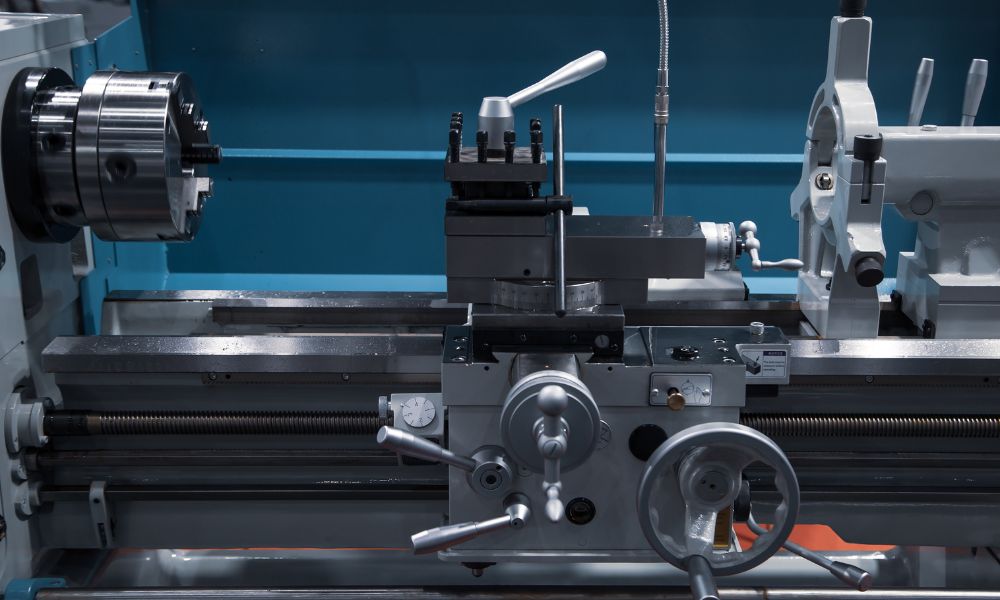

The CNC industry thrives on precision and efficiency, with tooling constantly evolving to improve performance and productivity. Emerging innovations address the need for better material utilization, faster production times, and accuracy. Let’s explore six innovative tooling trends in the CNC industry.
High-Performance Coated Cutting Tools
High-performance coatings on cutting tools enhance tool life, reduce friction, and improve surface finishes, making them indispensable for many manufacturers. Titanium nitride (TiN) and titanium aluminum nitride (TiAlN) are two common coatings transforming cutting tools. TiN excels in reducing surface wear, while TiAlN offers thermal stability, ideal for high-speed machining.
The coatings act as a barrier between the tool and the material, lowering friction during cutting operations. Lower friction reduces heat build-up, preventing premature tool wear. For example, coated tools mitigate issues in aluminum machining, such as material adhesion, producing smoother finishes and faster cycle times.
Other Coated Materials for CNC Machining
These materials expand the capabilities of CNC cutting tools, catering to a variety of applications and material types:
- Cubic Boron Nitride (CBN): CBN is incredibly hard and excels in machining hard materials, such as cast iron or hardened steel. This coating resists wear and provides exceptional durability, suiting high-volume production.
- Diamond-Like Carbon (DLC): This coating reduces friction and wear, perfect for non-ferrous materials, such as aluminum or copper. Its smooth finish decreases material adhesion and improves tool performance.
- Chromium Nitride (CrN): CrN offers excellent corrosion resistance and performs well in applications involving moisture or abrasive conditions. It also enhances surface lubrication during machining.
- Zirconium Nitride (ZrN): ZrN supports machining plastics and aluminum. This coating provides a superior finish and prevents material sticking, ensuring clean, accurate cuts.
- Aluminum Chromium Nitride (AlCrN): AlCrN offers thermal and oxidation resistance, ideal for high-speed and dry machining operations.
Thread Mill Cutters for Precision Machining
Thread mill cutters offer unmatched flexibility and precision for threading applications in CNC machining. These tools create internal and external threads with extreme accuracy, which is especially useful in industries such as aerospace and medical manufacturing. Their advanced design also helps workers tackle challenging materials, such as stainless steel and titanium.
A single-thread mill cutter can handle multiple variables, whether you need metric or imperial threads, simplifying operations. Unlike taps, which require a specific tool for every thread size, thread mills reduce inventory needs while saving costs. For example, a manufacturer shifting between projects that require M8 metric and ⅜” imperial threads can use the same thread mill for both without compromising performance.

Specialized Tools for Composite Materials
Machining composite materials demands tools that handle their unique properties. However, their abrasiveness and susceptibility to defects make regular tools unsuitable for handling them effectively. Specialized tools tailored for composite machining deliver clean, consistent results.
Reinforced Cutting Edges
Tools for composite applications incorporate reinforced cutting edges that can withstand high levels of abrasion. For instance, carbon-fiber composites, popular in aerospace for their strength-to-weight ratio, can quickly wear down standard cutters. Reinforced edge tools improve longevity and produce smooth, defect-free cuts while maintaining component integrity.
Minimized Delamination
Avoiding layer separation, or “delamination,” is one of the most pressing challenges in machining composites. Damaged layers weaken structural integrity, compromising the finished product. Tools with specialized helix angles or cutting geometries reduce cutting stress, ensuring that composite materials hold their original strength post-machining.
For example, drill bits for composite laminates typically include a sharper point or optimized flute geometry. These features allow clean material removal without inducing shear forces that lead to weak points in the material.
Micro-Machining Tools for Tiny Components
Micro-machining tools for tiny components are an innovative tooling trend in the CNC industry. These tools enable CNC machines to handle intricate features and ultra-tight tolerances, an essential capability for the production of medical devices, electronics, and even microfluidic systems.
Micro-machining tools, such as micro end mills and tiny drills, cut with extreme accuracy. They can handle high rotational speeds and fragile workpieces. For instance, manufacturing stents or orthopedic implants involves cutting complex geometries in titanium or cobalt-chromium. Maintaining part integrity while achieving these precise designs would be nearly impossible without micro tools.
Electronics manufacturers also rely heavily on micro-machining to produce intricate circuit boards and connectors. These tools allow for clean, burr-free cuts, ensuring that components fit together perfectly without interference.
Challenging Material Removal
Handling minuscule dimensions brings challenges that standard CNC tools can’t address. Removing material on such a small scale can lead to burr formation or tool deflection. Micro-machining tools combat these challenges with unique geometries optimized for small-scale operations.
For example, tools with sharper cutting edges and specific coatings support micro-machining. These features minimize material adhesion, ensuring that surfaces remain smooth and precise. Additionally, the reduced weight and compact size of tools ensure lower cutting forces, reducing the risk of tool deflection and inaccuracies during machining.
Multi-Tasking Tool Innovations
Multi-tasking tools simplify machining operations, allowing CNC machines to handle multiple processes in one setup. They may handle drilling, milling, and tapping simultaneously. For example, one tool might drill a hole, chamfer its edges, and create threads in a single motion. Of course, this consolidation reduces the number of separate tools needed. However, it also minimizes alignment errors between processes.
Advantages of Multi-Tasking Tools
Multi-tasking tools simplify machining and bring several cost and workflow benefits to production processes. Here’s how they add value across industries:
- Multi-tasking tools eliminate frequent tool swapping, allowing operators to spend more time machining and less time reconfiguring machines.
- Combining functions ensures all operations happen in a fixed setup, minimizing variances and improving accuracy.
- Single-tool solutions streamline workflows, especially critical in high-volume manufacturing environments, generating faster production cycles.
- Fewer tools reduce overall inventory needs while lowering the frequency of tool replacements, increasing cost efficiency.
- Small and mid-sized shops can handle diverse operations with fewer tools, increasing adaptability to changing project requirements.

Flexible Tool Holding Systems
Modern machining demands tool holders that can adapt to evolving processes while maintaining accuracy and stability. Flexible tool holding systems address these needs, delivering optimized clamping for a range of machining operations. These systems keep CNC tools operating at peak performance, from high-speed milling to heavy-duty turning.
Vibration can degrade surface finishes, hamper dimensional accuracy, and lead to premature tool wear. Precision tool holders solve these issues with advanced damping capabilities. For example, hydraulic tool holders offer exceptional clamping force with reduced runout, ensuring smoother operations even under high cutting pressures.
Furthermore, quick-change tool holding systems boost productivity by slashing setup and retooling times. For example, a manufacturer running rough milling and fine-finishing operations can quickly switch between the two toolsets using modular units. This flexibility benefits smaller machine shops that handle diverse projects, enabling them to stay competitive against larger operations.